
Tags
Knödel. A word worthy of discussion. A dish that can defeat an army if done well. And also, if done poorly. Probably. Or not. But wouldn’t it sound good in a History Channel special?
Knödel, in Mrs J’s mind, is quintessentially German. She figures it’s likely she’ll get beat up maybe by Austrian and/or assorted Slavic friends for saying so. Apologies in advance, a’right? She doesn’t really know where Knödel were first made, or anything about the history of Knödel at all, really.
She does know good Knödel when she gets some though. And she did this week. In Germany. So there. Good German Knödel, ha!
This is the restaurant where she got it, somewhere close to Koblenz.

It was a really nice place, with good service and a nice atmosphere. This is their courtyard.

The Knödel (Semmelknödel) were served with chanterelles cooked lightly with some bacon, a choice of meat (Mrs J chose pork filet medallions) and a sweet red berry sauce.
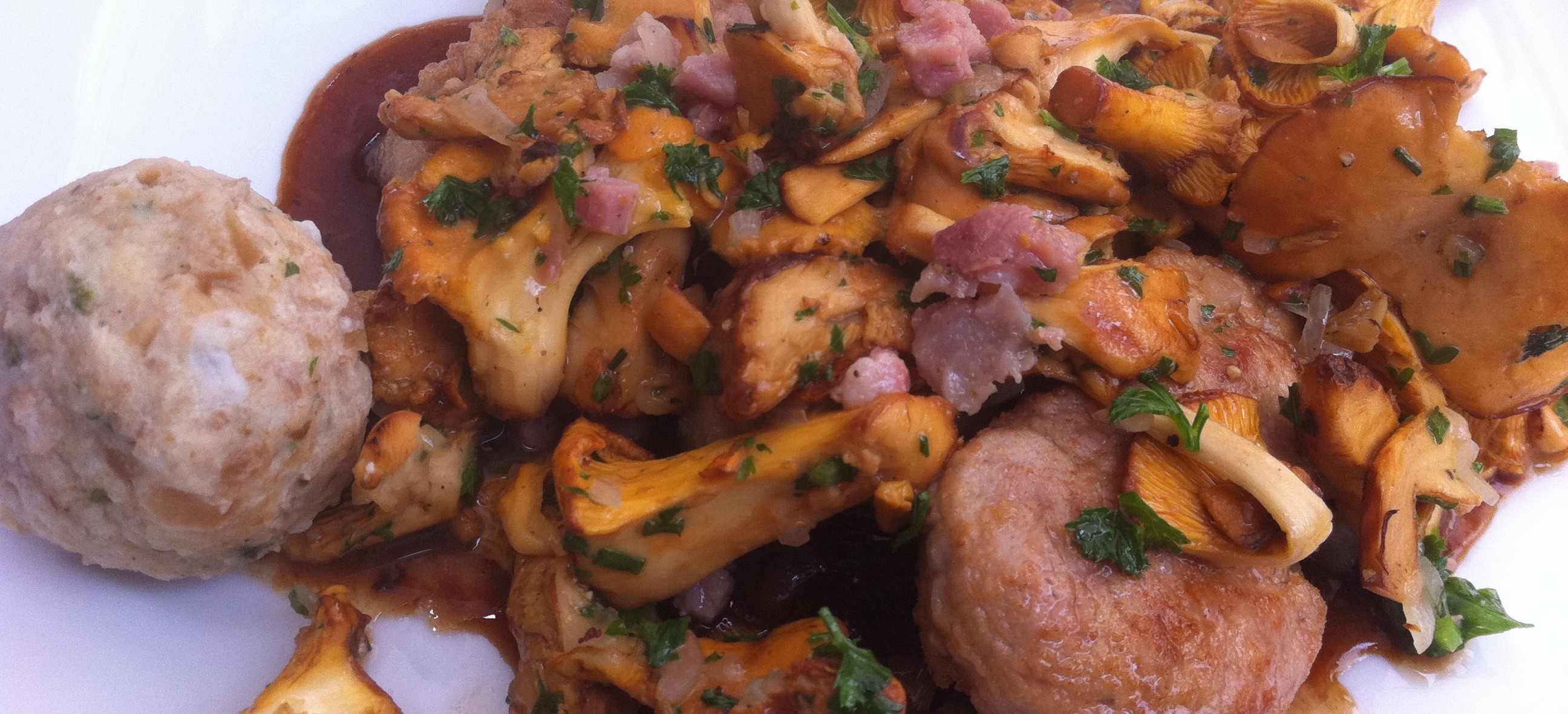
It tasted great. Mrs J would go back!
 mrsjsideas
Knödel (singular: der Knödel) or Klöße (singular: der Kloß) are large round poached or boiled potato or bread dumplings, made without yeast. They are typical components of Austrian, German, Hungarian and Czech cuisine, and come in many different forms. They can be made from flour, potatoes, old bread, semolina and many more. In most cases they are used as a side dish for meat, like roasted meat or stews. But they can also be served as a dessert (for example filled with plums as “Zwetschgenknödel”) or in a soup.
http://en.wikipedia.org/wiki/Kn%C3%B6del
:-)))
Oh no! You can make Knödel with plums?!? And here my poor tummy was hoping for a plum-free week …