
Saffron is a wonderful spice if you disregard the fact that it rivals gold in price. Though the price is really not that surprising considering this is a powder made from the distal end of collected crocus carpels.

Whoever discovered the culinary properties of these crocus carpels clearly had a lot of time on their hands.
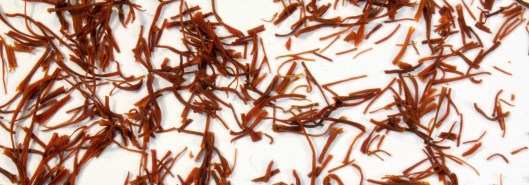
Mrs J likes saffron in paellas, fish stews and many other dishes. She’s also looking forward to one day finding out what the medicinal properties of saffron may be. Most of all though, saffron is a Christmas spice for Mrs J.
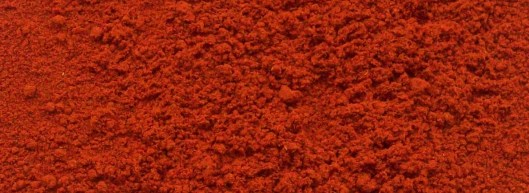
The reason for this Christmas association is the traditional “Lussekatt”, a sweet and particularly shaped wheat bun made with saffron and raisins. Mrs J makes these every year for Lucia (13 December), except last year, which was weird.

Just about every Scando person has made Lussekatter at some point in their life. So Scando people are hereby excused. If the rest of you would like to try your luck, here’s how you make them.
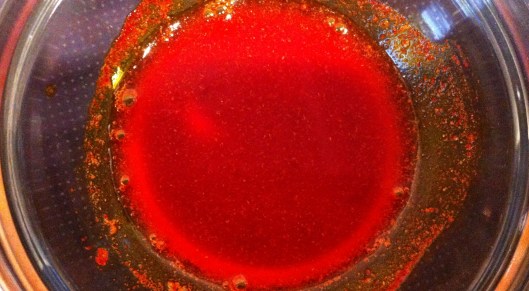
This bake is quite a lengthy process but you can shorten the time significantly by getting organised at the start. The first thing to do is to put 1g of saffron into a small bowl with 1/2 tsp of salt and 1 tbsp of alcohol.
For the record, this is the one time of the year that Mrs J uses vodka. (She prefers a glass of wine. Which may not be very Scando but there you have it.)
Word of warning, be very careful with the saffron before it’s mixed into the dough. Not only is it worth its weight in gold, it’s likely to permanently stain anything sensitive brightly yellow. You might not want your kitchentops redecorated for Christmas. Just sayin’.
While the saffron steeps in the alcohol (about 30 minutes) make sure you have a medium sized pot, a big bowl and several baking trays lined with oven proof paper ready. Also, make sure you have a designated (well cleaned) area ready to work the dough. Get all your ingredients out of the cupboard and ready to mix. You’ll need 175g of butter, 1.5dl of white baking syrup, 5dl of milk (1.5% fat), 50g of live yeast (not the dried kind), 1 lightly beaten egg and about 1kg of fine white wheat flour. (At the end you’ll also need another egg and some raisins.)
Melt the butter in the pot on medium heat. While it’s melting crumble the yeast into the big bowl. When the butter has melted add the milk, the syrup and the saffron-mix into it. Let the mix reach 37°C. Use a thermometer if you have one. Or use the Scando method – stick a finger in it. Go for it when it feels like a nice warm bath.
Going for it in this case means adding the egg and pouring the liquid over the yeast. Stir until the yeast has dissolved. Then carefully mix in the flour until you have a nice elastic dough that just lets go of the sides of your bowl. Add all the flour if required but don’t add any more than just necessary. Sprinkle the dough liberally with flour and cover with a towel. Set a baking tray on top to make a nice dough-sauna. Place in a draft-free and warm place to proof for 45 minutes.

Use the proofing time to clean up and have a little breather. The artsy part is still to come.
Once the dough has proofed it will be a lot bigger and full of air. Dust your baking area with flour and dump the dough onto it. Push and stretch out the dough three or four times and roll it back together. It should be nice and springy and lovely yellow.

Divide it in two. Put the second part back in the bowl and cover it while you’re working the first part.
Divide the first part into fairly even portion sized pieces (about 16 pieces).
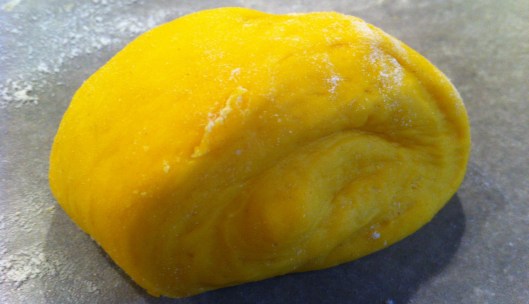
Roll each piece out into a thin snake of dough.
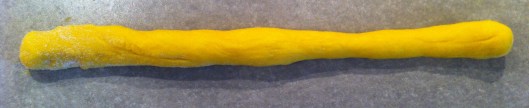
Roll one end back on itself.

Roll the other end back in the other direction.

Try not to scream as the dough springs back and generally tries to foil all your plans to tame it into a nice shape. It’s all part of the experience.
Transfer to a baking tray. Each baking tray can hold 6-8 breads, nicely spaced. Once one tray is filled, cover with a cloth and leave to proof for another 30 minutes. (Usually this is about the time it takes to finish making the rest of the breads.)
When the final proofing is done, push a raisin into the center of each swirl and give the breads a light eggy wash.
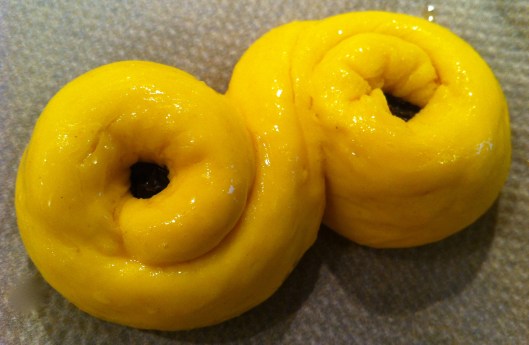
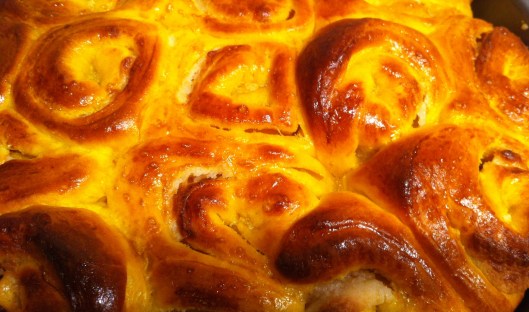
Cook in the oven at 225°C for 9-10 minutes. Watch to make sure they don’t burn!

Let cool before eating or packing up. These guys go dry quite quickly so if you want to eat them fresh do so in the next 24 or so hours. That said, you don’t loose much by freezing them. A quick microwave blast revives the flavour very nicely on the day.
This is the keystone of the Swedish saffron bake but there are a million variations on how to finish the saffron dough. Next year perhaps Mrs J will share her pimped saffron tearaway cake…
Happy baking!
 mrsjsideas
Pingback: You’ve done the baking, now get your hat « mrsjsideas